
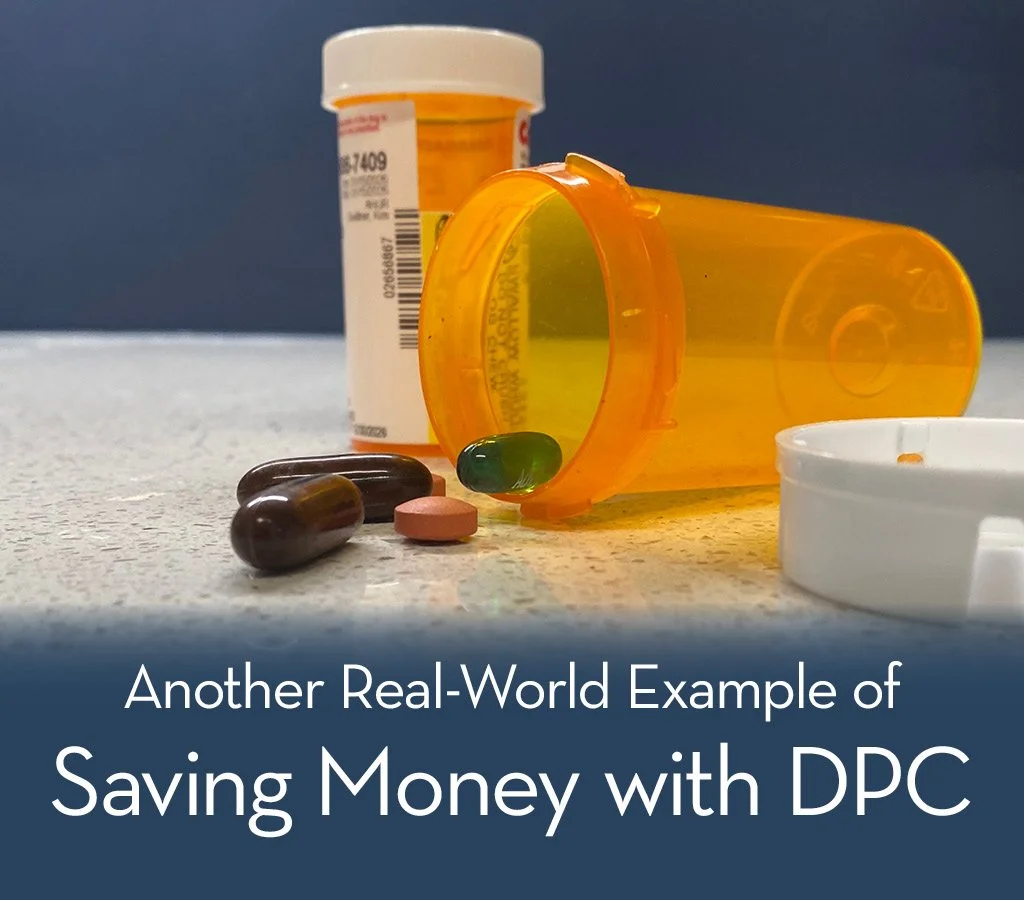
Another Real-World Example of Saving Money with DPC
Last week I had a new patient who came to me from a traditional insurance-based practice. She was tired of not being able to get through to her physician, and having to wait months for an appointment — the typical reasons people check out Direct Primary Care (DPC) practices like Nexus Primary Care.
Spending $150 per month on a doctor was a tough choice for her. By the end of the visit, she was only spending $50 net per month. And it wasn’t because she talked me into giving her a big discount. How did we accomplish this?

How to Find a Direct Primary Care Doctor
DPC Frontier Mapper (linked here) is a good source for finding DPC practices in your area. But beyond that, what are the things you should be thinking about to determine which practice(s) will be the best fit for you?

Please Bother Me! That’s What I’m Here For
Twice in the last two weeks, I’ve talked with patients who have had urgent issues pop up after-hours. Both patients decided to head to an urgent care clinic and got good treatment, though it was expensive. One of them said “I didn’t want to bother you.”
And that made me stop and think — how do my patients know when to go to the emergency room, and when to use an urgent care center? And when should they call me instead?

Does DPC Save Money?
Sometimes people balk at the idea of a subscription fee to a DPC doctor. You still need to have health insurance to cover emergency and catastrophic care (although some people opt out of this). So this is just more money spent, right? But there are financial savings, too.